Choose one of a film (one you have not seen before) by one of the following directors:
Richard Ayoade, Spike Lee, P.T. Anderson, Fernando Meirelles, Akira Kurosawa , Quentin
Tarantino, Steve McQueen, Jean-Luc Godard , Woody Allen,
François Truffaut, Jim Jarmusch, Roberto Rossellini, Spike Jonze, Michel
Gondry, Jafar Panahi , Sofia Coppola, Sergio
Leone,
David
Lynch, Alfred Hitchcock, Danny Boyle, Robert Rodriguez, Ang
Lee, Steven
Soderbergh, Stanley
Kubrick, Charlie Chaplin, David Mamet, Roman Polanski, Francis Ford Coppola, Fritz Lang, John Cassavetes, Mike Nichols, Ridley Scott, Brian De Palma, Terrence malick, Ingmar Bergman , Abbas Kiarostami, Gus Van Sant.
Tuesday, December 2, 2014

Friday, September 5, 2014
Women-Directed Films
WATCH ONE OF THE FOLLOWING MOVIES AND WRITE A REVIEW IN YOUR BLOG. Prepare to Discuss in Class. Go to site for more info on women directors
Blackboards (Samira Makhmalbaf)
Eve's Bayou (Isabel Coixet)
Europa Europa (Agnieszka Holland)
I Shot Andy Warhol (Mary Harron)
The Milk of Sorrow (Claudia Llosa)
Fire (Deepa Mehta )
High Art (Lisa Cholodenko)
Gas Food Lodging (Alison Anders)
My Life Without (Me Isabel Coixet)
Middle of Nowhere (Ava DuVernay)
Jeanne Dielman, 23, Quai du Commerce, 1080 Bruxelles (Chantal Akerman)
The Hidden Half (Tahmineh Milani)
White Material (Claire Denis)
Outrage (Ida Lupino)
The Watermelon Woman (Cheryl Dunye)
Vagabond (Agnès Varda)
The Mourning Forest (Naomi Kawase)
Orlando (Sally Potter)
Palo Alto (Gia Coppola)
Zarin (Shirin Neshat)
Tooba (Shirin Neshat)
You and Me and Everyone We Know (Miranda July)
Blackfish (Gabriela Cowperthwaite, 2013)
Eve's Bayou (Isabel Coixet)
Europa Europa (Agnieszka Holland)
I Shot Andy Warhol (Mary Harron)
The Milk of Sorrow (Claudia Llosa)
Fire (Deepa Mehta )
High Art (Lisa Cholodenko)
Gas Food Lodging (Alison Anders)
My Life Without (Me Isabel Coixet)
Middle of Nowhere (Ava DuVernay)
Jeanne Dielman, 23, Quai du Commerce, 1080 Bruxelles (Chantal Akerman)
The Hidden Half (Tahmineh Milani)
White Material (Claire Denis)
Outrage (Ida Lupino)
The Watermelon Woman (Cheryl Dunye)
Vagabond (Agnès Varda)
The Mourning Forest (Naomi Kawase)
Orlando (Sally Potter)
Palo Alto (Gia Coppola)
Zarin (Shirin Neshat)
Tooba (Shirin Neshat)
You and Me and Everyone We Know (Miranda July)
Blackfish (Gabriela Cowperthwaite, 2013)
The Punk Singer (Sini Anderson, 2013)
Bastards (Claire Denis, 2013)
Una Noche (Lucy Mulloy, 2012)
The Queen of Versailles (Lauren Greenfield, 2012)
The Pervert's Guide to Ideology (Sophie Fiennes, 2012)
The Kids are All Right (Lisa Cholodenko, 2010)
Tiny Furniture (Lena Dunham, 2010)
Fish Tank (Andrea Arnold, 2009)
Old Joy (Kelly Reichardt, 2006)
Lost in Translation (Sofia Coppola, 2003)
Boys Don't Cry (Kimberly Peirce, 1999)
Virgin Suicides (Sofia Coppola, 1999)
Priest (Antonia Bird, 1994)
Paris is Burning (Jennie Livingston, 1990)
I've Heard the Mermaids Singing (Patricia Rozema, 1987)
Friday, February 14, 2014
Monday, January 20, 2014
Self Portrait Film
Pre-Production:
In this delightful memoir, award-winning French filmmaker Agnès Varda (Vagabond, Cléo From 5 to 7) employs all the magic of cinema to juxtapose the real and the imagined, the past and the present, pain and joy. For this 81-year-old artist, memories live through her films. In The Beaches of Agnès, she uses film clips, old photos and gorgeous reenactments to revisit her Belgian youth, association with the French New Wave, marriage to director Jacques Demy (The Umbrellas of Cherbourg) and the making of her movies. You don’t need to know anything about Varda to enjoy this enchanting glimpse into the treasure chest of her memories.
Examples:
https://vimeo.com/81179752
https://vimeo.com/81326924
https://vimeo.com/1709393
https://vimeo.com/2790928
https://vimeo.com/4038051
https://vimeo.com/35181064
https://vimeo.com/57062858
https://vimeo.com/84835301
https://vimeo.com/84610131
https://vimeo.com/84529656
https://vimeo.com/84644945
https://vimeo.com/83643924
https://vimeo.com/83737133
https://vimeo.com/84910997
- Begin Journaling your daily thoughts and experiences while thinking about the events, the places, the persons, or anything elese that has shaped you into who you are today. (Describe memories of meaningful places, relationships, objects or
experiences.)
- Create a storyboard for a short video self-portrait that visually communicates the personal significance of a place, relationship, object or experience.
- For inspiration watch the film The Beaches of Agnès, a cinematic self-portrait of filmmaker Agnès Varda (an icon in French New Wave films)
In this delightful memoir, award-winning French filmmaker Agnès Varda (Vagabond, Cléo From 5 to 7) employs all the magic of cinema to juxtapose the real and the imagined, the past and the present, pain and joy. For this 81-year-old artist, memories live through her films. In The Beaches of Agnès, she uses film clips, old photos and gorgeous reenactments to revisit her Belgian youth, association with the French New Wave, marriage to director Jacques Demy (The Umbrellas of Cherbourg) and the making of her movies. You don’t need to know anything about Varda to enjoy this enchanting glimpse into the treasure chest of her memories.
Examples:
https://vimeo.com/81179752
https://vimeo.com/81326924
https://vimeo.com/1709393
https://vimeo.com/2790928
https://vimeo.com/4038051
https://vimeo.com/35181064
https://vimeo.com/57062858
https://vimeo.com/84835301
https://vimeo.com/84610131
https://vimeo.com/84529656
https://vimeo.com/84644945
https://vimeo.com/83643924
https://vimeo.com/83737133
https://vimeo.com/84910997
Thursday, October 24, 2013
Screenwriting
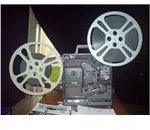
According to BARRY PEARSON, A WRITER/PRODUCER IN THE FILM AND TELEVISION INDUSTRY, in a nutshell:
The NOVEL.
Its CONDUIT is the written word.
Its
DOMINANT STORYTELLING MODE is the printed page.
Its MOST POWERFUL CREATOR is
the author
The STAGE PLAY.Its
CONDUIT is the live theater production.
Its DOMINANT STORYTELLING MODE is the
spoken word.
Its MOST POWERFUL CREATOR is the playwright.
The
SCREENPLAY.Its CONDUIT is the movie
production.
Its DOMINANT STORYTELLING MODE is directions and actor
dialogue.
Its MOST POWERFUL CREATOR (Screenwriter is not the creator of the
finished work. He or she is the creator of the plan for the other
creators).
The
MOVIE.Its CONDUIT is the movie theater
screen.
Its DOMINANT STORYTELLING MODE is the projected image.
Its MOST
POWERFUL CREATOR is the director.
Screenwriting in Context
A screenplay is the script or the blueprint exclusive for producing visual arts as film and television. Screenwriting is the process of writing a screenplay.Screenplays are dominated by images. Screenwriting divides the story into scenes while playwright breaks it down into acts.
Script writing is the process of writing dialogue which can be used in talk shows, news programs, sports broadcasts and infotainment(magazine style) programs. Script writing doesn't involve discussing the visuals of a TV show or a movie. This is a more specific type of script writing which is called screenwriting.
Screenwriting is also a process of writing a script, but this is only used for filmmaking.Screenwriting provides the visuals that complement what the characters are doing and saying.
Writting your Screenplay
Keep in mind that a screenplay is visual and your characters' actions move the story forward from scene to scene. Actions show the audience what it needs to know. Seeing a character do something is far more powerful than having him or her talk about it.A scene is a unit of action. In each scene, define who (character or characters), what (situation), when (time of day), where (place of action), and why (purpose of the action).
|
Scene Headings: Each time
your characters move to a different setting, a new scene heading is required.
|
|
Scene headings are typed on one line
with some words abbreviated and all words capitalized.
|
Example: A scene set inside a hospital emergency room at night would have the following heading:
| ||||||||||
INT. HOSPITAL EMERGENCY ROOM - NIGHT
| ||||||||||
Interior is always abbreviated INT. and exterior is abbreviated EXT. A small dash (hyphen on your keyboard) separates the location of the scene from the time of day. Leave a two-line space following the scene heading before writing your scene description.
|
|
Here is an example of a complete scene in the screenplay
format:
|
|
INT. HOSPITAL
EMERGENCY ROOM - NIGHT
|
|
A crowded hospital
emergency waiting room.
Clean but cheerless.
|
|
Sick and injured people sit in plastic chairs lined up in rows. A
TV mounted near the ceiling BLARES a sitcom. No one is watching.
|
|
A man moans softly as he presses a bloody gauze pad against his
forehead. A woman cradles a listless infant in her arms.
|
|
CATHY sits at the end of the first row of plastic chairs. Her head
is bent over, and she stares intently at the floor.
|
|
She raises her head slowly, brushes her long, silky hair away from
her face.
|
|
We see fear in her eyes as they focus on a clock that hangs above
the front desk. She twists a tissue between her fingers and is unaware that bits
of it are falling on the floor.
|
|
The door to the emergency treatment room opens, and a
middle-aged DOCTOR dressed in hospital green walks through the door toward
Cathy, who bolts out of the chair and hurries toward him.
|
DOCTOR
(apologetically) We did everything possible. |
CATHY
(gasps) What are you saying? |
DOCTOR
I'm sorry… |
CATHY
(screaming) No! |
|
All eyes in the waiting room are riveted on Cathy and the
Doctor.
Cathy lunges at
the Doctor, beating her fists against his chest.
|
|
CATHY (CONT'D)
(shouting) You killed him! |
|
Our scene ends here with Cathy's
last words, but it could continue with more dialogue and action. Note that
(CONT'D), the abbreviation for continued, is added in parentheses next to
Cathy's name above. CONT'D is added here because Cathy has just spoken and is
continuing to speak. Her dialogue was interrupted by a description of other
actions, not by another character's dialogue.
|
Wednesday, September 18, 2013
Video Art

The genre known as video art, is a new type of contemporary art, and a medium of expression commonly seen in Installations, but also as a stand-alone art form. Initiated by such experimental artists as Andy Warhol, Wolf Vostell, and Nam June Paik, recent advances in digital computer and video technology, enabling artists to edit and manipulate film sequences, have opened up a range of creative opportunities and drawn numerous artists into the genre. Indeed, the Turner Prize - a key indicator of excellence in the postmodernist art world - was awarded to video artists in 1996/1997/1999. See also Turner Prize Winners. The theory and practice of video art is now taught as a Minor degree subject in many of the best art schools in America.

Video art typically appears in two basic varieties: single-channel and installation. In single-channel works, a video is screened, projected or shown as a single series of images. Installations typically comprise either an environment made up of several distinct pieces of video screened simultaneously, or a combination of video with Assemblage, or Performance art. At present, Installation video is the most common form of video art, being part of the multi-media fashion for combining architecture, design, sculpture, electronic and digital art. Latest developments include the use of the Internet and computer art to manipulate film imagery and to control videos from the world wide web or remote locations. To keep up to date with the video art world, see Art News Headlines.
Video Artists
Early video artists tended to be those involved with conceptual and performance art, and experimental film. These include Americans Vito Acconci, Zeinabu Irene Davis,John Baldessari, Peter Campus, Doris Totten Chase, Joan Jonas, Bruce Nauman and others. Others, like Steina Vasulka (born Steinunn Briem Bjarnadottir) and Woody Vasulka, explored the video genre itself, utilizing synthesizers to produce abstract works. Later exponents included Americans Sadie Benning, Paul Chan, Gary Hill, Miranda July, Mary Lucier, Paul Pfeiffer and Eve Sussman; the Canadians Colin Campbell, Stan Douglas, Lisa Steele, Bill Viola and Rodney Werden. European video artists include the Germans Agricola de Cologne, Dieter Froese, and Wolf Kahlen; the Poles Wojciech Bruszewski and Miroslaw Rogala; the Britons Douglas Gordon, David Hall and Gillian, the Italian Stefano Cagol, the Austrian Martin Arnold, the Swiss Pipilotti Rist, and the Spaniard Domingo Sarrey.
Monday, September 2, 2013
Avant-Garde Films
 |
L.H.O.O.Q., Marcel Duchamp (1919) |
in French means front guard, advance guard, or vanguard. The avant-garde pushes the boundaries of what is accepted as the norm within definitions of art/culture/reality.
I suppose all artists are avant-garde at some time in their work because they have to push boundaries of what is accepted as the norm or the status-quo.
Jean Cocteau
Jonas Mekas
Man Ray
History: Top 10 Avant-Garde Filmmakers
Current: Short Avant-Garde films on Vimeo
Subscribe to:
Posts (Atom)